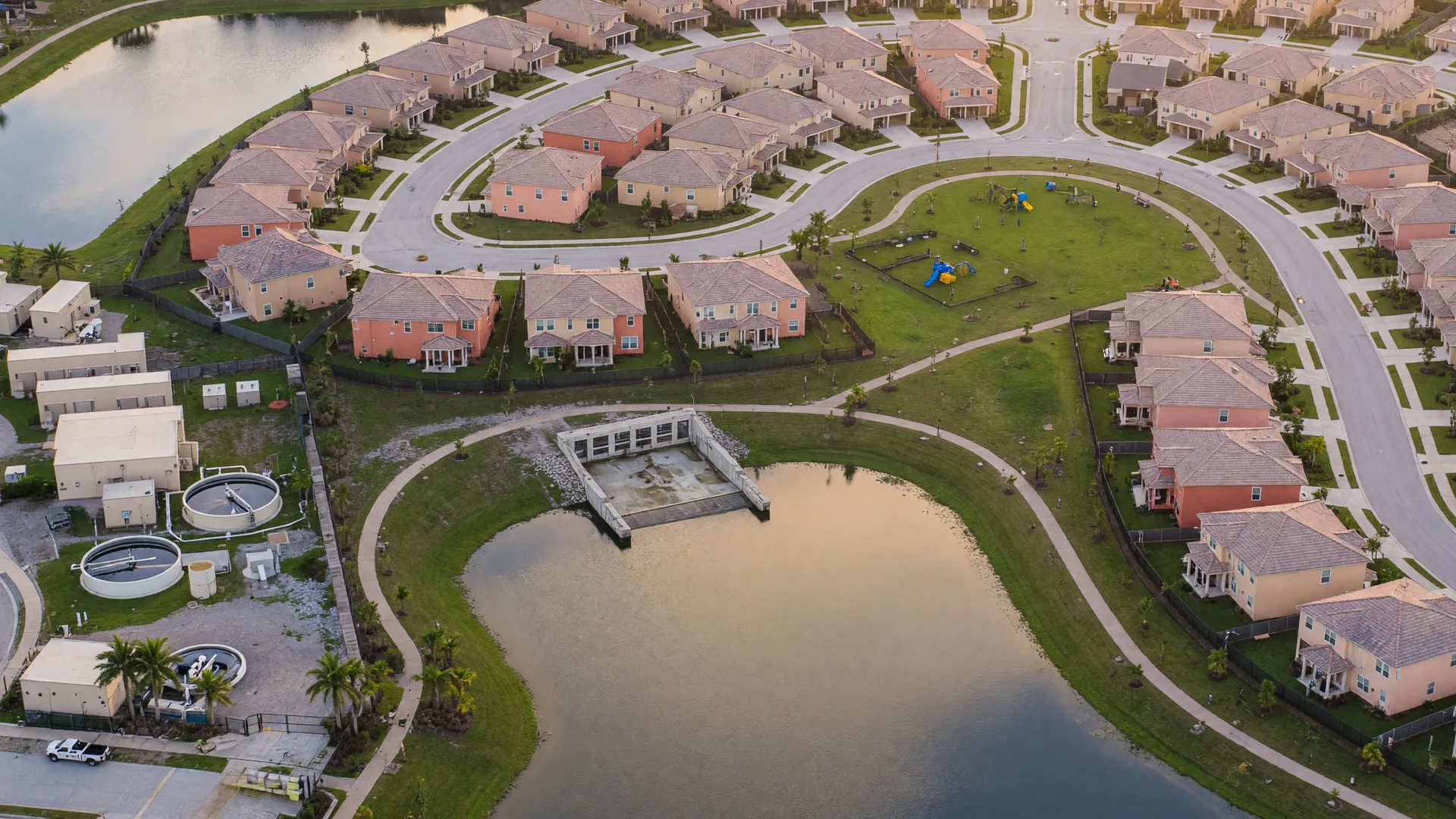
A Community Development District, or CDD, is a special-purpose local government created under Florida law (Chapter 190, Florida Statutes) to build and maintain the infrastructure of a new community: roads, water and sewer lines, stormwater systems, streetlights, parks, and sometimes amenities. New master-planned communities across Central Florida use CDDs because they let the developer finance that infrastructure up front and pay for it over time through assessments on the homes. If you are buying new construction in a community like Horizon West, Sunbridge, or Lake Nona, a CDD assessment is likely part of the picture, so it helps to understand what it is before you compare monthly payments.
What a CDD is and how it works
A CDD is created when a developer petitions the local county or municipality, or the state for very large districts, to establish it before building begins. The district is governed by a board of supervisors, initially appointed by the developer and later elected by property owners as homes sell. The district can issue tax-exempt bonds to pay for the community's infrastructure. Those bonds are repaid over time by the property owners in the district through annual assessments, which is how the cost of big-ticket infrastructure gets spread across many years instead of being folded entirely into the price of each new home.
Why new communities use CDDs
In a new master plan, the roads, pipes, parks, and drainage have to exist before the first residents move in. A CDD lets the developer build that infrastructure early and pay for it over 20 to 30 years through assessments, rather than waiting on county budgets or rolling the entire cost into home prices. That is why CDDs are common in newer, larger communities across Central Florida: the infrastructure is built and maintained now, and the people who live in the community pay for it over time. The trade-off from a buyer's perspective is that the assessment is a real, recurring cost separate from the home price, the HOA fee, and the mortgage.
What CDD fees are and how they appear on your tax bill
CDD assessments are collected in two parts. The first is the debt-service assessment, which repays the bonds that financed the community's infrastructure; this portion is typically fixed for the life of the bonds and ends once they are paid off. The second is the operations and maintenance assessment, which covers day-to-day upkeep of community facilities and continues as long as the district exists. Both are non-ad valorem special assessments, meaning they are not based on the value of your home the way property taxes are. They appear as a line item on your annual property tax bill from the county tax collector, and lenders usually collect them in your monthly escrow payment along with taxes and insurance.
What to ask before you sign
- Is this homesite in a CDD, and which district? The sales contract and the preliminary title work should name the district, and the district's own records state the current assessment and any outstanding bonds.
- What is the annual assessment today, and what does it cover? Confirm the split between the debt-service and operations and maintenance portions, and what the O&M portion pays for.
- Are there bonds outstanding, and what is the remaining balance on this parcel? The bond portion is usually fixed, but the balance shrinks over time and matters if you compare this home against a resale.
- Can the assessment be paid off? In many districts the bond portion can be prepaid in a lump sum, which removes it from the tax bill, while the operations and maintenance portion stays with the property.
- Does the obligation transfer to the next buyer? Because the assessment runs with the land, a future buyer generally assumes it, so the size of the remaining assessment is a first question on any resale later.
- What is the HOA on top of the CDD? The two are separate obligations, and some communities stack a homeowners association fee on top of the CDD assessment.
How CDD costs interact with the purchase price and your monthly payment
The cleanest way to think about a CDD is as part of the all-in monthly cost, not the sticker price. A community with a higher home price and no CDD can cost the same per month as one with a lower price and a CDD, once the assessment is spread across the year and added to principal, interest, taxes, insurance, and HOA dues. That is why comparing new homes only on base price can mislead: lot premiums, the CDD assessment, the HOA fee, and property taxes all land in the monthly payment. The All-In Monthly Cost workbook in the New Construction Builder Secrets guide walks through exactly this comparison, and your lender can run the escrow numbers for a specific homesite before you commit.

Written by Tyler Gibson
Florida-licensed Realtor, team leader, and investor with 150+ transactions. Have a new-construction question this guide did not answer?